- info@techkasetti.com

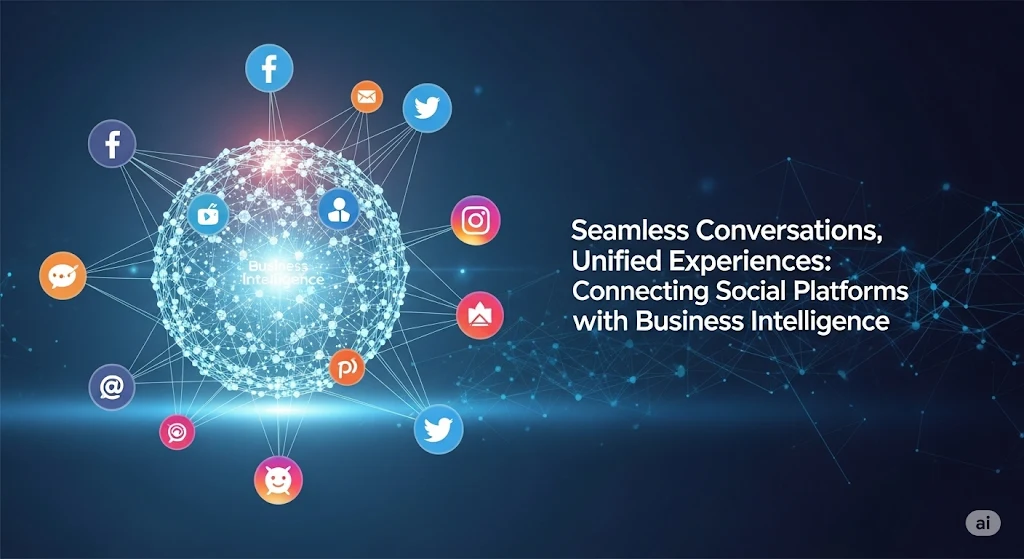
Seamless Conversations, Unified Experiences: Connecting Social Platforms with Business Intelligence
Omnichannel Intelligence at Scale
In today’s hyper-connected landscape, customer engagement doesn’t wait for business hours—and it certainly doesn’t wait for the boundaries of a single platform. Whether it’s a customer reaching out through WhatsApp, a patient messaging via Telegram, or a user interacting with embedded web channels, responsiveness and intelligence must operate in real time, across every touchpoint.
This is where our AI-powered orchestration system comes in: a smart, agent-led platform that bridges conversational channels with enterprise systems. Whether managing healthcare records, CRM workflows, or analytics platforms, this system delivers contextual, dynamic responses that align with the intent and sentiment of your audience.
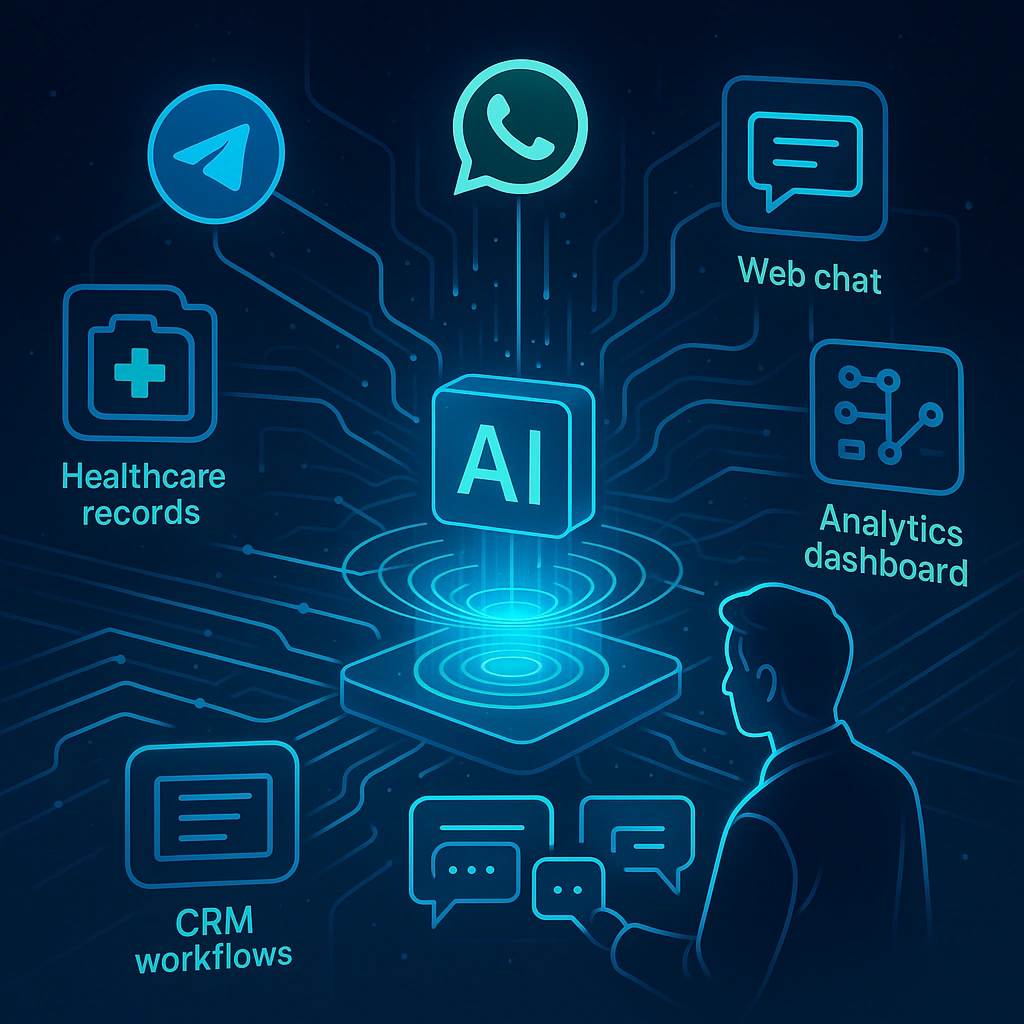

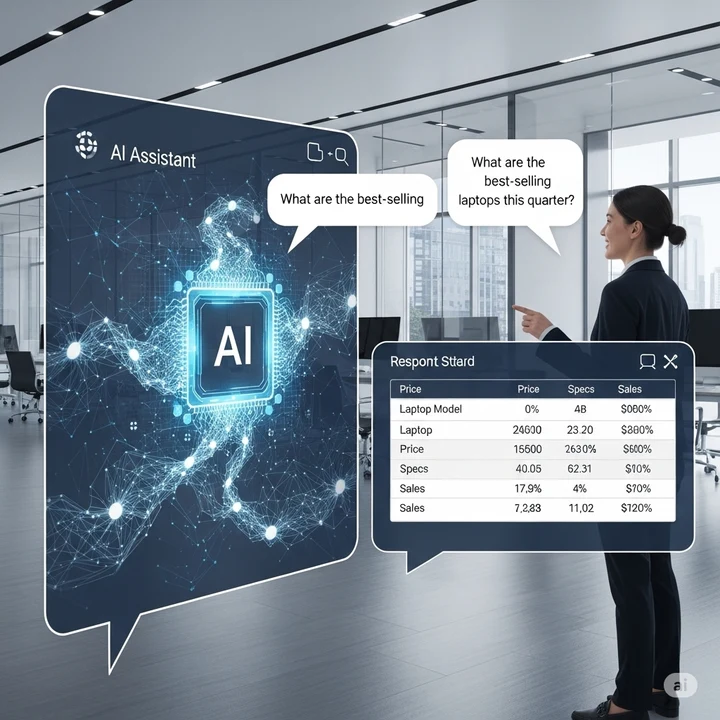
At the heart of this system lies a flexible orchestration engine powered by intelligent agents. These agents interpret natural language inputs from messaging apps and coordinate actions across various enterprise backends. The result? Human-like, accurate, and timely interactions—every time.
Imagine a patient sending a text about their upcoming appointment. In seconds, the agent can access historical data,
retrieve the appointment record, offer rescheduling options, and log the interaction into the appropriate system—
without human intervention.
📌Key Capabilities
🌍Multilingual Transcript Extraction
No matter the language, tone, or format—our system extracts meaning from every interaction. From casual text messages to formal video inquiries, all communication is automatically transcribed and translated where needed. This enables real-time understanding of customer sentiment, requests, and concerns across geographies and demographics.
🔄Agentic Orchestration
These aren’t just bots—they’re thinking agents. Each message sets off a chain of autonomous processes that determine the right data to retrieve, the optimal response to craft, and the precise system to update. This “agentic” orchestration ensures context is maintained across messages and channels, allowing for smooth, multi-step workflows.

Contextual Q&A with Memory
Our system doesn’t just respond—it remembers. By retaining context across interactions, the agent can answer follow-up questions intelligently, even days later. This continuity builds trust, eliminates repetition, and significantly improves customer satisfaction.
Think: “What was my last bill?” followed by “Can you compare it with the previous one?”—and getting accurate insights on both.

Integration with Distributed Data Resources
The system connects and interacts with multiple data sources—internal databases, CRM platforms, analytics warehouses, and more. By feeding and retrieving data from these systems, it ensures every interaction is rooted in real-time business intelligence.
Whether it’s verifying a prescription, checking account balance, or analyzing purchasing behavior, the agent pulls the right information at the right time.

🧩The Agentic Future of Business Communication
In this new era of communication, messaging platforms aren’t just channels—they’re the frontlines of customer experience. By embedding intelligent agents directly into these platforms and connecting them with your core systems, you don’t just respond faster—you operate smarter.
This is the evolution of business communication: real-time, AI-powered, context-aware, and deeply integrated.
Ready to bring your conversations into the age of intelligence? Let’s make every message matter. 💬✨
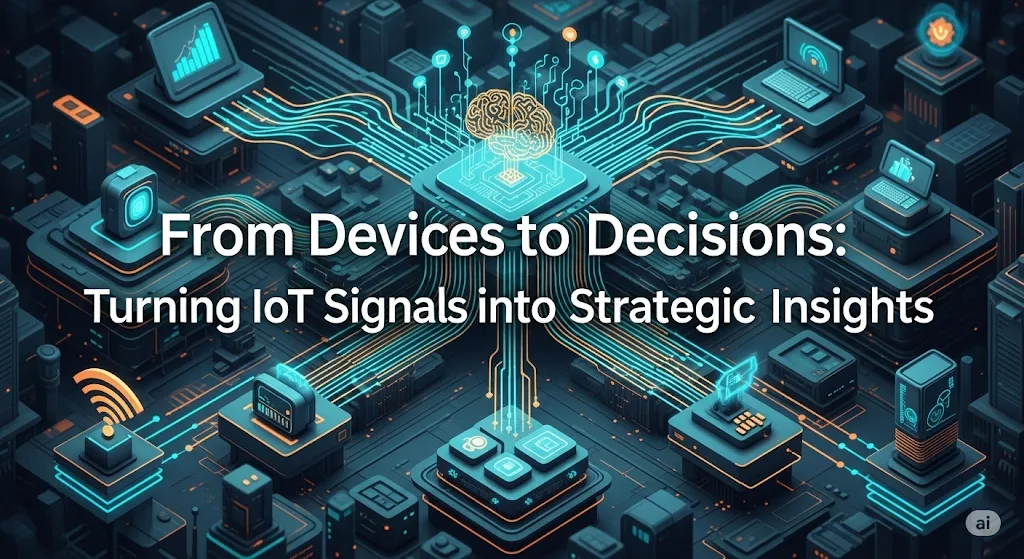
From Devices to Decisions: Turning IoT Signals into Strategic Insights

In today’s hyperconnected world, enterprises are inundated with raw data from a myriad of IoT devices—yet very few harness it to drive timely and actionable decisions.
What if your organization could capture real-time signals from field devices and turn them into revenue-generating insights within seconds?
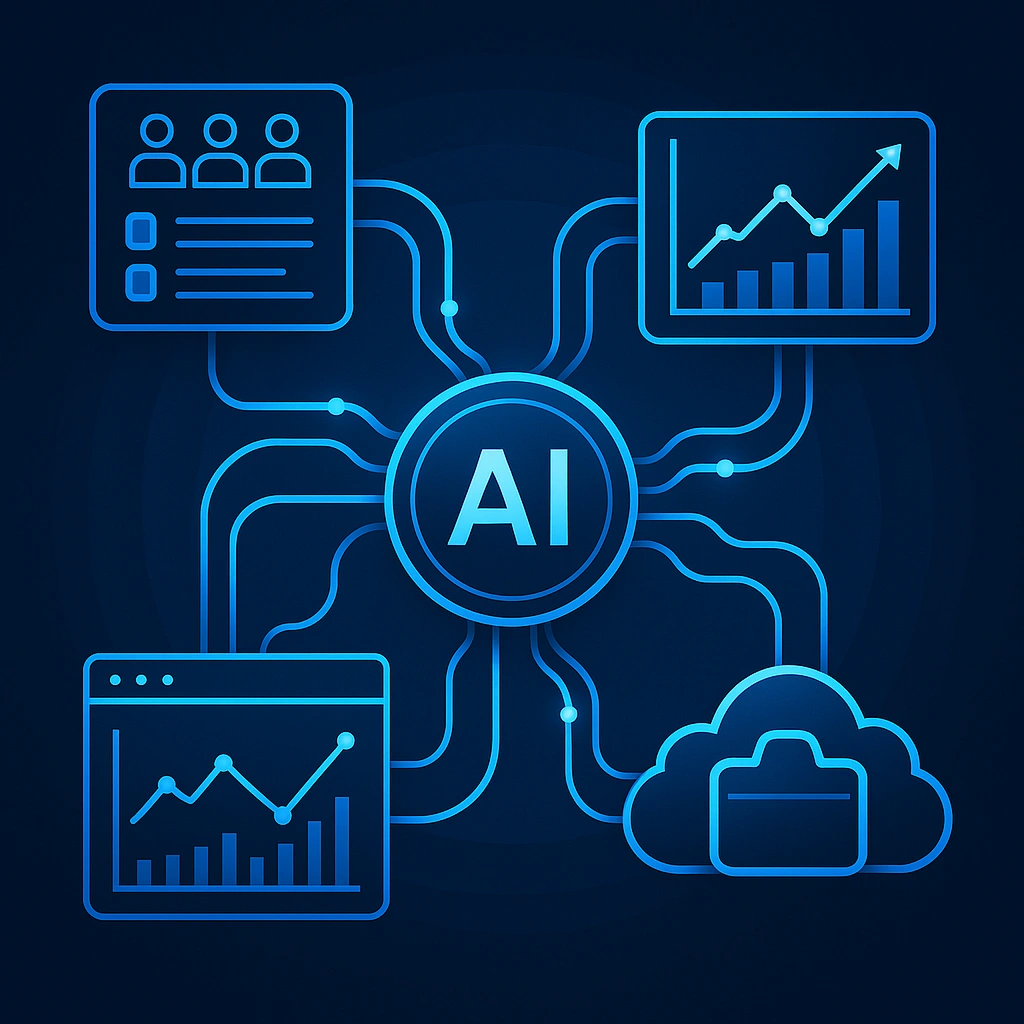
That’s exactly what our latest integration achieves—a fully automated, intelligent pipeline that transforms raw sensor outputs into real-time dashboards and insights that empower frontline teams, service managers, and decision-makers.

The Power of Seamless Flow: From Sensors to Strategy
At the heart of this solution is a streamlined ecosystem where data travels securely, intelligently, and purposefully—from the edge to your strategic core.
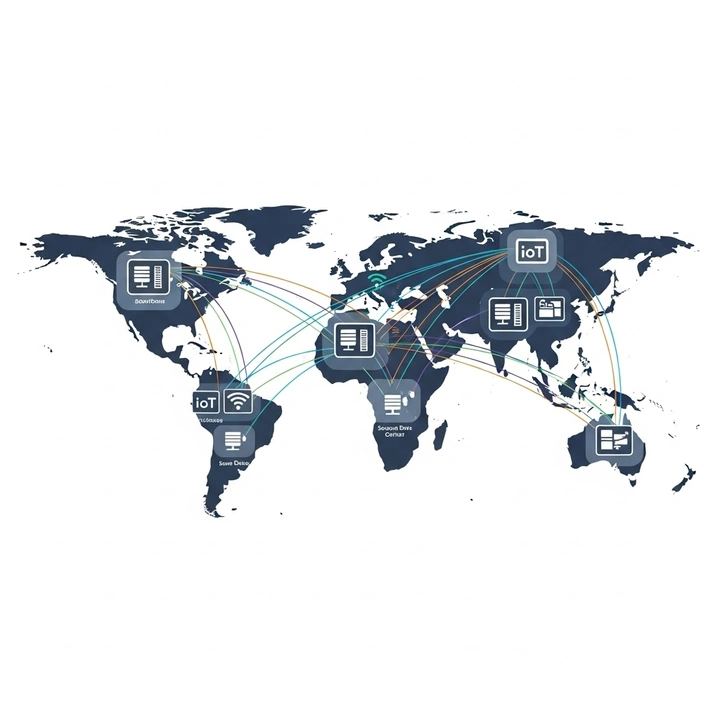
This initiative connects the physical world of IoT with digital operations in real time, ensuring immediate awareness and response capabilities across your business units.

🔐 Secure Storage with Governance Built In
Raw sensor data needs a safe, compliant, and highly scalable environment. This solution ensures that every signal—no matter how frequent or voluminous—is securely captured and stored in a central repository designed for enterprise-grade data governance.
The result? Your data is audit-ready, privacy-aligned, and always available for downstream use.
💡 Business Value:
- ✔️ Full compliance with internal and external data policies
- ✔️ Cost-effective scalability for growing IoT fleets
- ✔️ Foundation for historical trend analysis

🔁 Dynamic Transformation for Business Consumption
Raw data alone doesn’t drive value. That’s why we introduced an intelligent transformation layer that contextualizes and refines the incoming data. By structuring sensor readings into business-relevant formats, the system ensures your operational and analytics teams get exactly the insights they need—no more, no less. The transformation process also includes enrichment logic, such as:- 📍 Mapping sensor IDs to physical asset locations
- 📊 Converting raw metrics into KPIs
- 🧹 Filtering redundant or noisy data
💡 Business Value:
- ✔️ Accelerated decision-making through curated information
- ✔️ Elimination of irrelevant data noise
- ✔️ Alignment of technical inputs with business outputs
🔗 Intelligent Integration with Customer 360 Platforms
Once transformed, the data seamlessly feeds into your enterprise CRM environment, unlocking customer and asset-level insights in real time. Field service reps now know the moment a device enters a critical state. Sales teams can upsell based on predictive usage. Operations managers can spot fleet-wide performance trends without waiting for a report.
The platform doesn’t just centralize data—it makes it work for you.
💡 Business Value:
- ✔️ Improved service response times
- ✔️ Data-driven sales enablement
- ✔️ Holistic customer and asset visibility
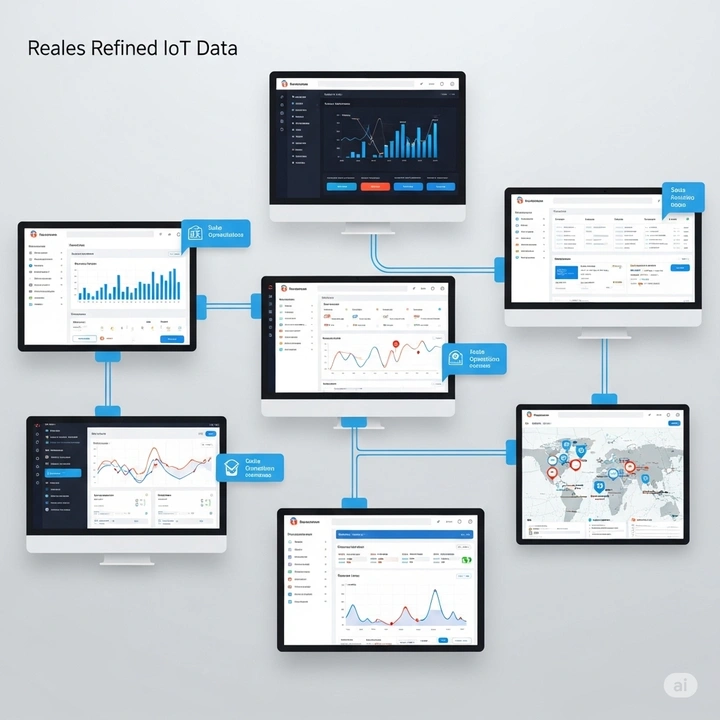

📊 Real-Time Dashboards for Instant Awareness
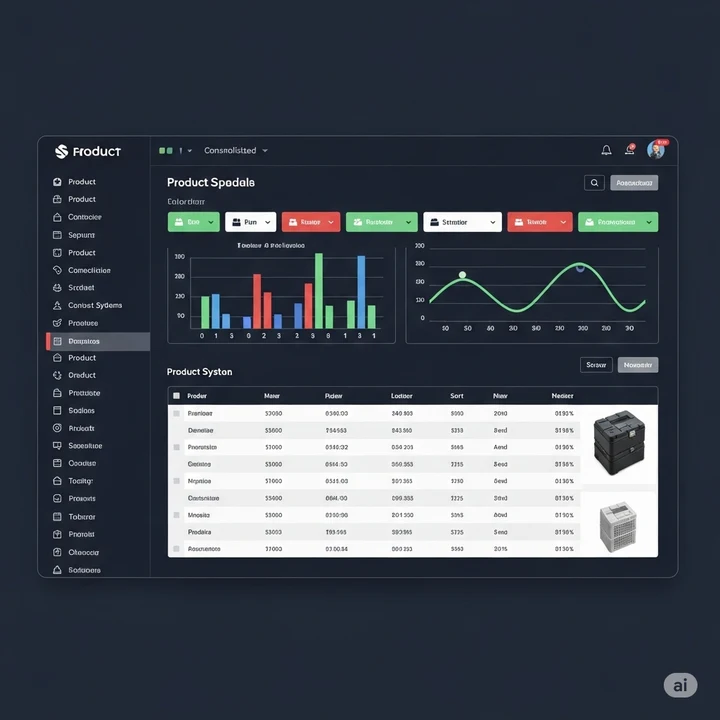
Gone are the days of quarterly reports and delayed alerts. This pipeline enables live dashboards and alerting mechanisms that give your teams instant situational awareness. Whether it’s a sudden temperature spike in an industrial fridge or unexpected downtime in a remote device, the right person gets notified—at the right time—with the right context. Visual dashboards are customizable, role-based, and mobile-ready, empowering stakeholders across departments to act fast and with confidence.💡 Business Value:
- ✔️ Reduced downtime and increased SLA compliance
- ✔️ Real-time KPI monitoring
- ✔️ Streamlined cross-team coordination
🧠 A Strategic Edge for the Modern Enterprise
This solution isn’t just a pipeline—it’s a strategic capability.
By fusing real-world sensor data with digital platforms in real time, your enterprise gains the agility, insight, and automation required to lead in a connected economy. You’ll shift from reactive to proactive, from fragmented to unified, and from lagging to leading.
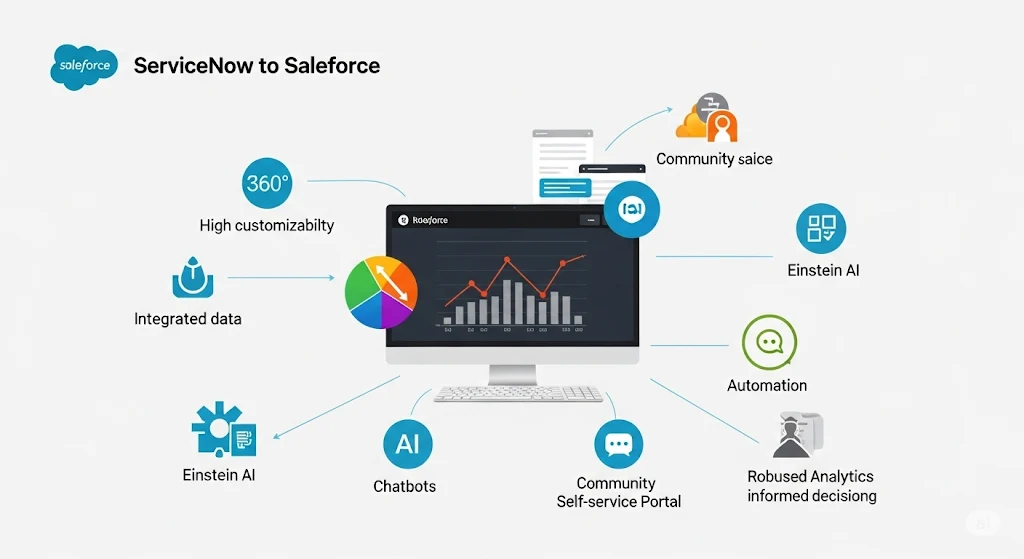
Service Now to Salesforce Migration


AI-Powered Behavioral Marketing System: Redefining Personalized Engagement at Scale
In today’s dynamic, hyper-competitive landscape, generic marketing is no longer sufficient. To capture attention and foster brand loyalty, enterprises need smarter, faster, and more personalized outreach mechanisms. The AI-Powered Behavioral Marketing System is a transformative solution engineered to deliver just that—intelligent, contextual, and scalable engagement across every customer journey.
This enterprise-grade platform elevates traditional marketing approaches by tapping into behavioral signals, applying predictive intelligence, and enabling real-time campaign decisions. Whether you’re looking to supercharge your conversions or deepen customer relationships, this system serves as your strategic blueprint for marketing transformation.
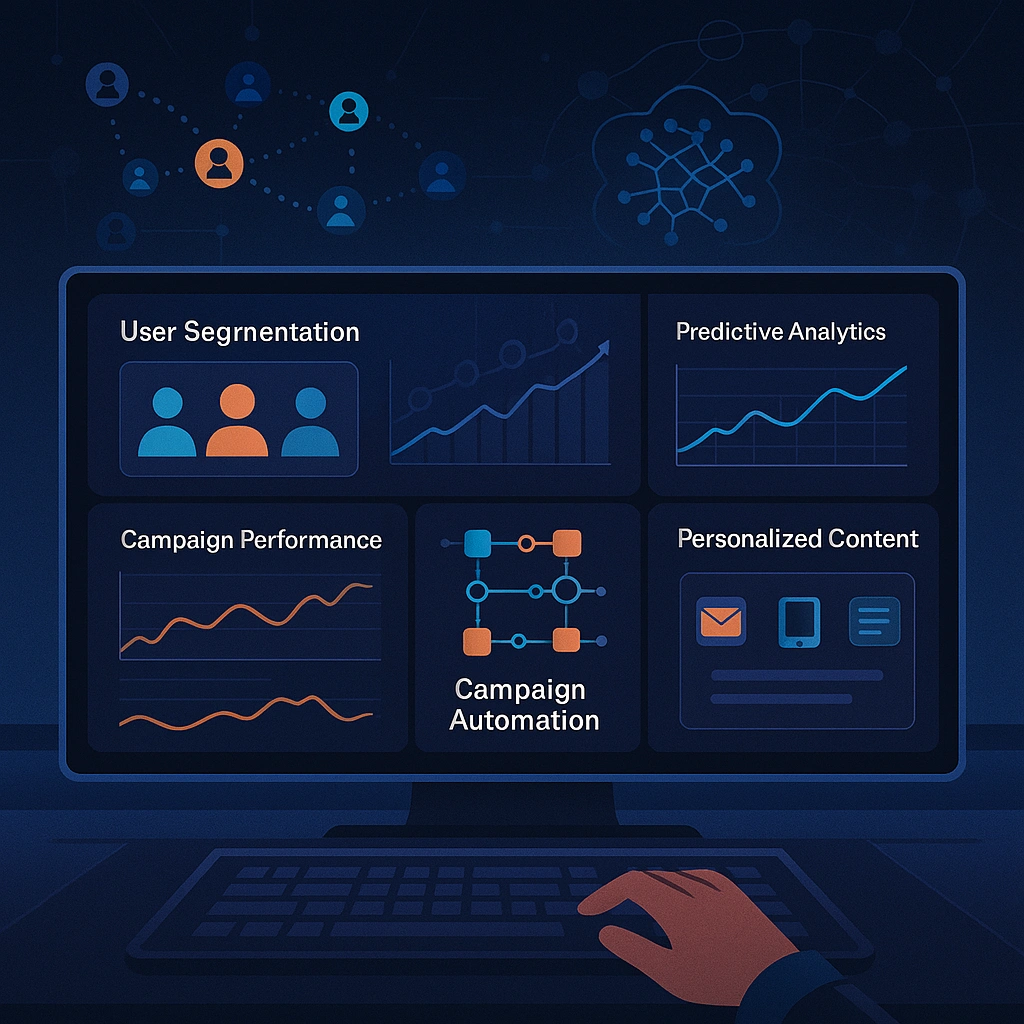
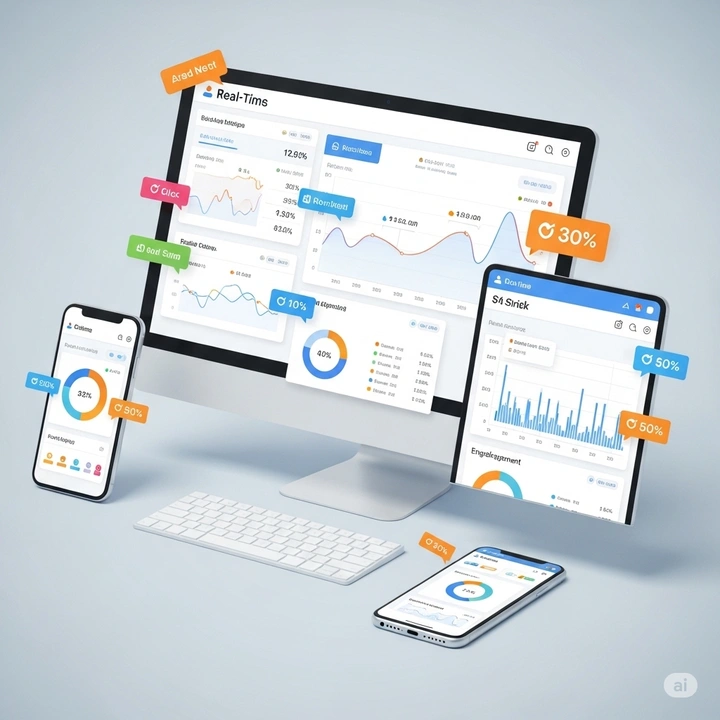
📊Real-Time Behavioral Data Tracking
Understanding your customer begins the moment they interact with your brand. This platform continuously monitors user actions—clicks, scrolls, views, and purchases—across channels, devices, and touchpoints.
- ✅ Instant visibility into user intent
- ✅ Dynamic behavioral heatmaps
- ✅ Lifecycle event tracking for every interaction
📈 Business Impact
Marketers can react as behaviors evolve, not after the fact. This proactive visibility fuels relevance and timeliness in every engagement.
🧠Intelligent Customer Segmentation
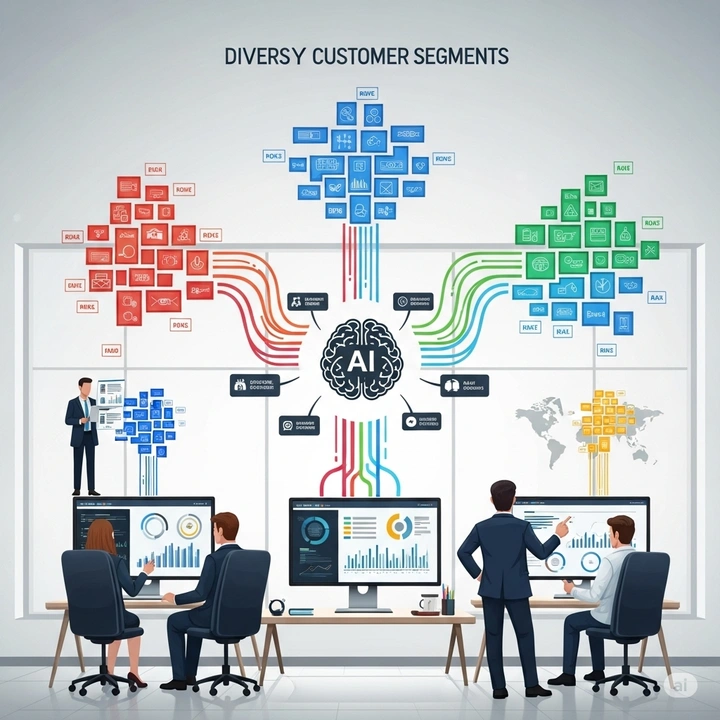
Not all customers behave the same—and they shouldn’t be treated the same either. This system uses behavioral cues and learning models to automatically segment users into high-intent, passive, or at-risk groups.
- ✅ Self-adjusting segments based on live behavior
- ✅ Demographic, psychographic, and contextual filters
- ✅ Zero manual input required for segment updates
📈 Business Impact
Segmentation becomes dynamic, enabling marketers to launch precision-targeted campaigns that resonate with each customer group.
🤖AI-Driven Personalization
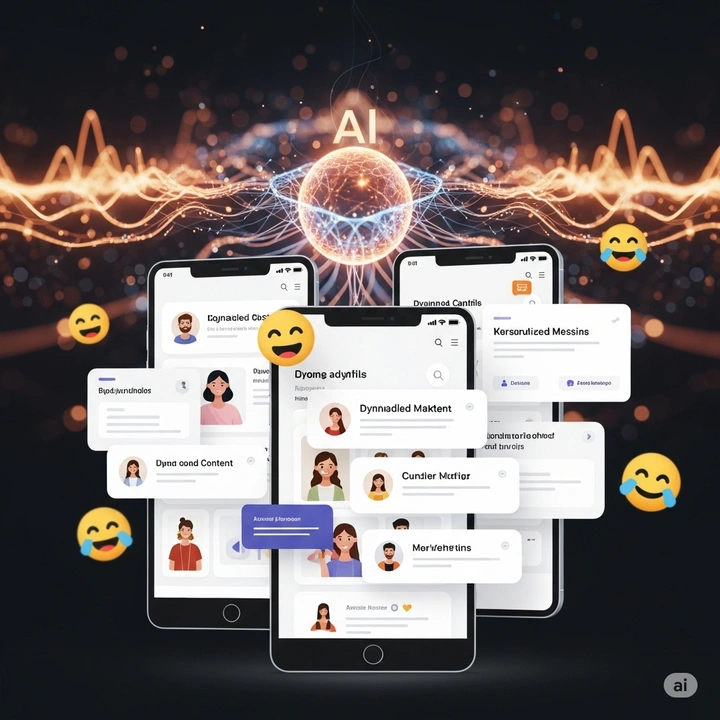
Generic messages don’t convert. Personalized experiences do. This platform tailors every interaction—messaging, content, and timing—based on individual user profiles and historical engagement.
- ✅ Personalized product or content recommendations
- ✅ Adaptive messaging across email, SMS, web, and mobile
- ✅ Content sequencing optimized for behavioral affinity
📈 Business Impact
When users feel understood, they engage more deeply. Personalized experiences lead to significantly higher conversion rates and customer retention.
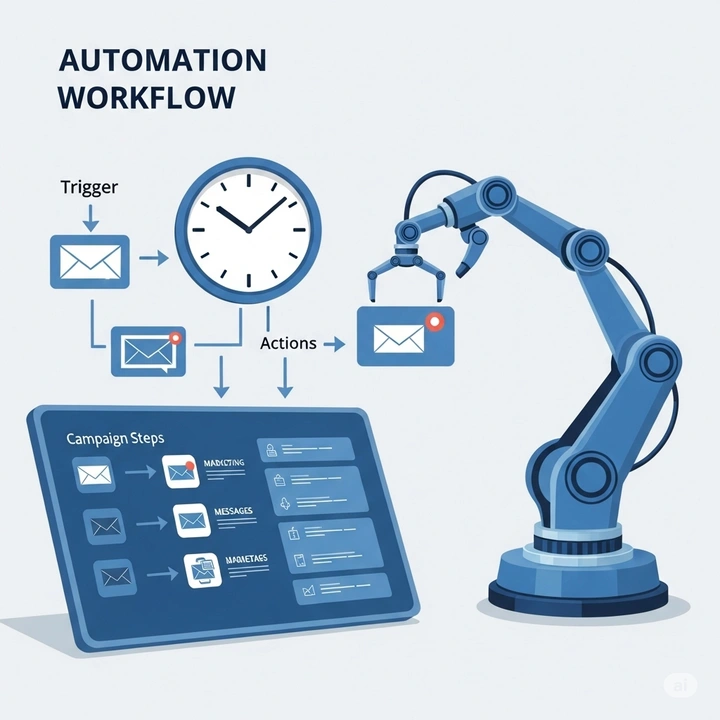
🔁Automated Campaign Execution
Manual campaign planning is outdated. This system enables hands-free campaign delivery based on pre-defined triggers and behavior-based automation flows.
- ✅ Journey orchestration with behavioral checkpoints
- ✅ Triggered campaigns based on events, scores, or inactivity
- ✅ Pre-built templates that launch with minimal input
📈 Business Impact
Campaigns don’t just run—they evolve. This ensures that every customer receives timely and relevant messages at the moment of highest impact.
📈Predictive Analytics for Conversion Optimization
Guesswork is out. Predictive intelligence is in. This system leverages behavioral signals to forecast the next-best action for each user—whether it’s a product upsell, content suggestion, or engagement nudge.
- ✅ Conversion probability scoring
- ✅ Abandonment prediction
- ✅ Timing and channel optimization
📊 Business Impact
With the ability to anticipate user behavior, businesses can act decisively and drive outcomes with confidence.

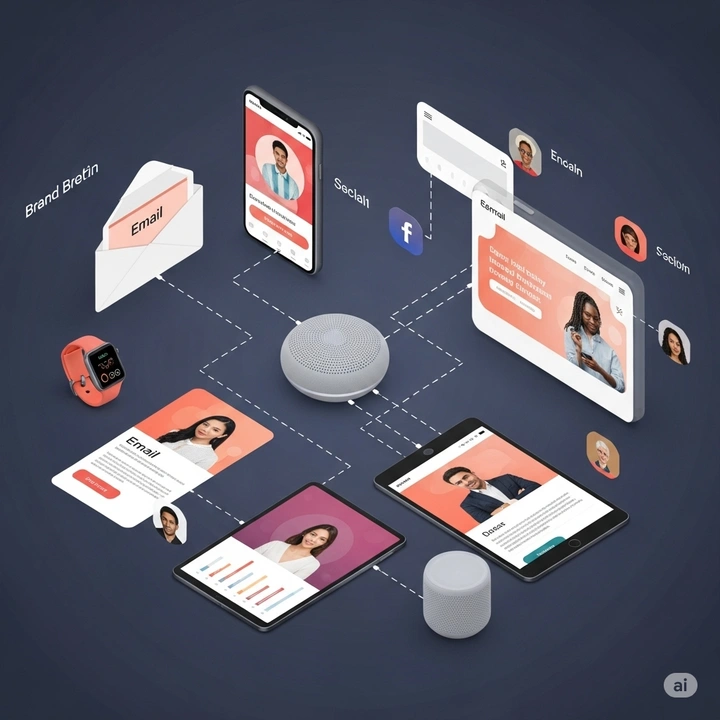
📲Omnichannel Engagement
Consistency breeds trust. This platform ensures unified messaging and experiences across every customer touchpoint—email, web, mobile, social, and beyond.
- ✅ Centralized messaging hub
- ✅ Cross-channel sync with real-time updates
- ✅ Responsive personalization across channels
📈 Business Impact
Users receive coherent, context-aware communication, no matter where they are. This continuity enhances brand perception and engagement.
🧩Dynamic Content Recommendations
Keep content fresh and relevant. The platform continuously analyzes engagement trends to serve the most impactful content at the right moment.
- ✅ Smart content rotation based on behavioral fit
- ✅ Real-time adjustments based on campaign performance
- ✅ Content affinity scoring
📈 Business Impact
Content is no longer a static asset—it becomes a living part of the engagement strategy, dynamically adapting to user needs.
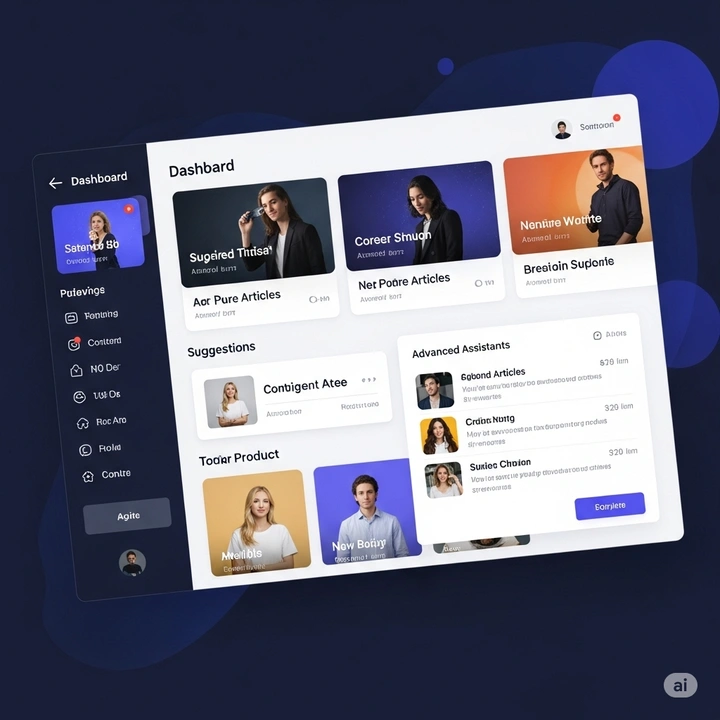

📉Performance Monitoring & Optimization
With built-in dashboards and executive summaries, this system provides instant clarity into campaign performance, audience engagement, and revenue attribution.
- ✅ Funnel insights and drop-off analysis
- ✅ Campaign and channel ROI measurement
- ✅ A/B testing with automated winner selection
📈 Business Impact
Marketing leaders can drive continuous improvement with granular performance visibility—turning insight into impact.
🏗️Scalable Marketing Automation Architecture
This isn’t a one-size-fits-all tool—it’s an enterprise-ready engine. Designed to scale with your business, the system supports millions of interactions with zero performance degradation.
- ✅ Multi-region deployment readiness
- ✅ Modular automation workflows
- ✅ No-code interfaces for campaign builders
📈 Business Impact
Marketing teams can experiment freely and deploy at scale—without technical roadblocks or operational delays.
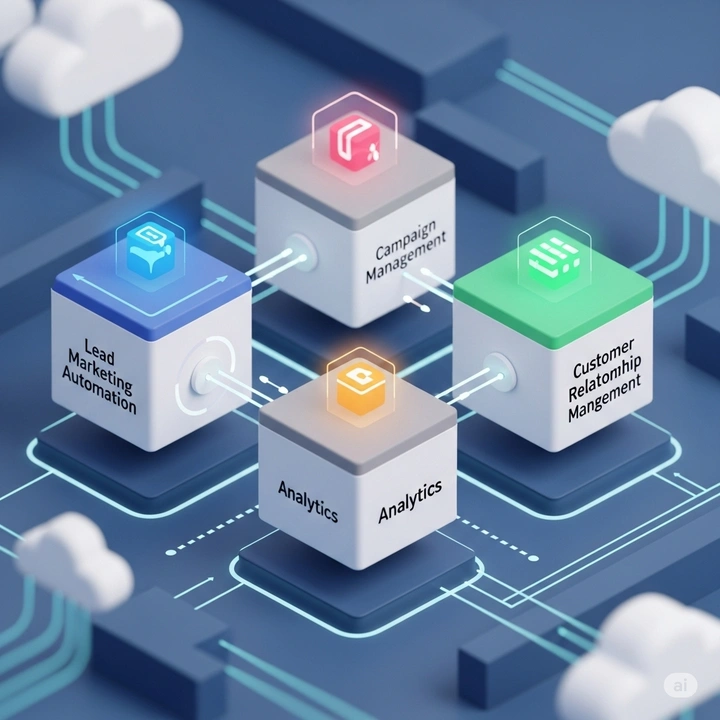

🤝Seamless Integration with Existing Data Ecosystems
Whether it’s a CRM, a data warehouse, or third-party tools—this system integrates natively to ensure fluid data exchange and operational synergy.
- ✅ Unified customer profiles
- ✅ Real-time data syncing with enterprise platforms
- ✅ Bi-directional data flows for enriched intelligence
📈 Business Impact
You don’t need to rip and replace. This solution fits into your current tech stack, enhancing your capabilities without disruption.
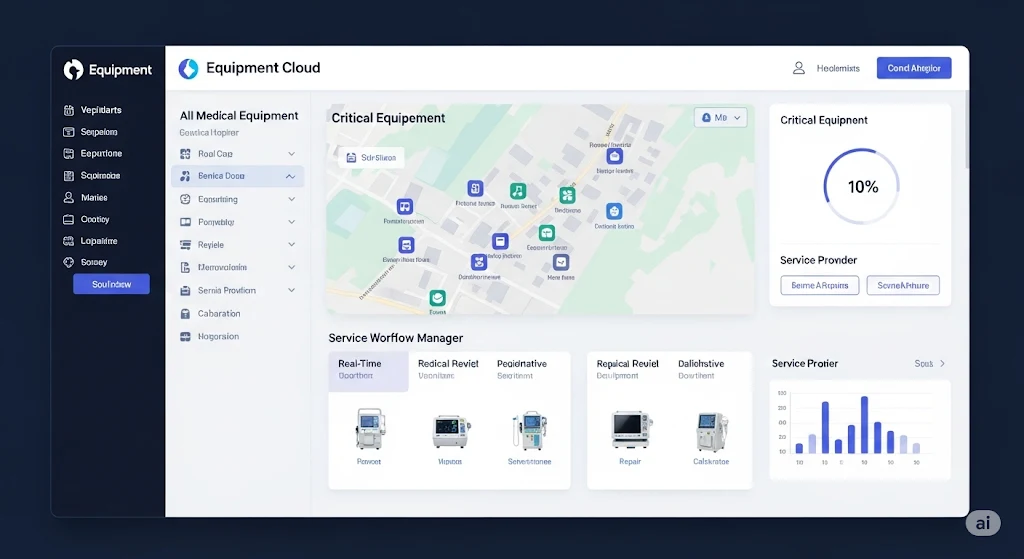
Revolutionizing Medical Equipment Management in Modern Healthcare
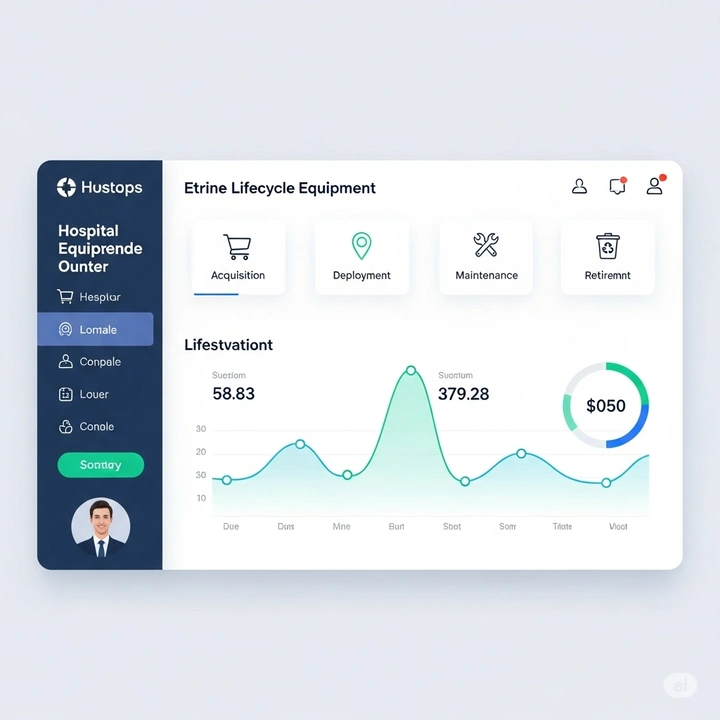
Managing the full lifecycle of medical devices, from acquisition to retirement, can often become disjointed and opaque. The Equipment Cloud solves this by providing a centralized framework to oversee every phase of the life cycle:
- Procurement & Onboarding: Capture vendor details, warranty info, and compliance certificates in a single, organized repository.
- Deployment & Allocation: Assign equipment to specific wards or departments, ensuring optimal utilization.
- Maintenance Scheduling: Track recurring service milestones, calibrations, and inspections for every asset.
- Decommissioning & Audit: Automate the retirement process with full audit trails and disposal guidelines.
This end-to-end visibility ensures that every piece of medical equipment is always accounted for, functional, and compliant with regulatory standards.
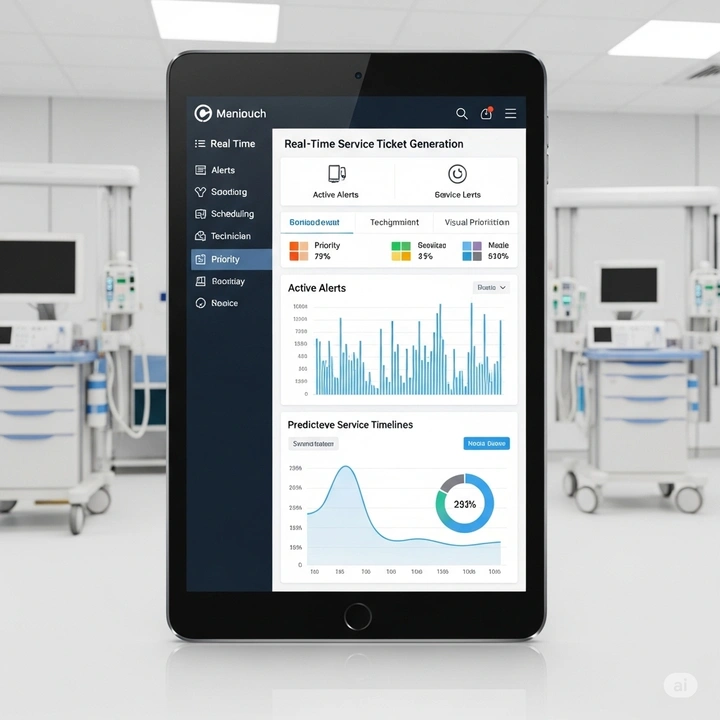
In traditional healthcare settings, maintenance often becomes a reactive process, triggered only after a failure occurs. The Equipment Cloud flips this paradigm by introducing predictive and automated service management:
- Trigger-Based Service Tickets: Automatically generate maintenance tickets based on usage data, warranty expiration, or compliance deadlines.
- Priority-Based Queues: Assign urgency levels to requests to prevent equipment downtime in critical care areas.
- Technician Allocation: Match service requests with available field engineers based on location and specialization.
The result? Faster turnaround times, improved equipment uptime, and reduced administrative overhead for biomedical engineering teams.
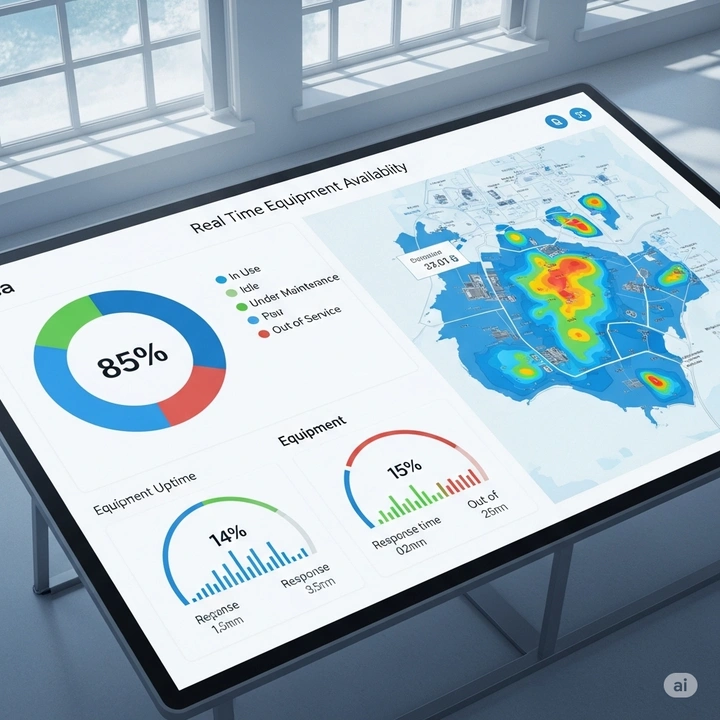
Knowing the real-time status of every critical medical device is no longer optional—it’s essential. The Equipment Cloud brings intelligent tracking and dynamic dashboards to the forefront:
- Live Usage Monitoring: Capture operational hours and performance metrics across all deployed units.
- Availability Snapshots: Visual dashboards show which assets are in use, idle, under maintenance, or out-of-service.
- Utilization Analytics: Identify underused or overused equipment to guide procurement decisions and improve ROI.
These capabilities empower operations teams to make data-backed decisions on reallocation, purchasing, and preventive care.
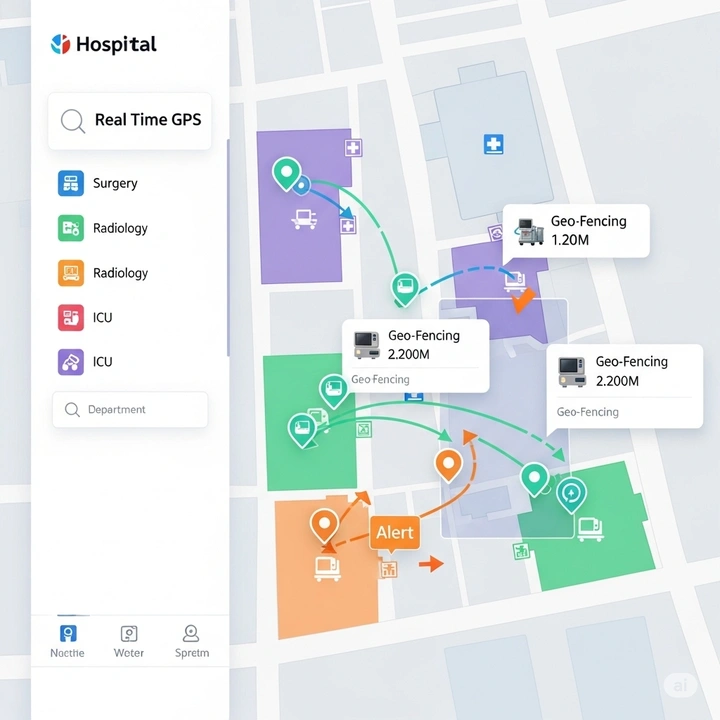
In large hospital networks, locating the right equipment at the right time can mean the difference between timely care and delays. The Equipment Cloud offers granular, location-based insights to solve this:
- Ward-Level Mapping: Visualize the current location of each asset across hospital floors and departments.
- Geo-Fencing Alerts: Get notified when equipment moves outside authorized zones.
- Equipment Handover Logs: Maintain digital logs of when and where assets are transferred.
With these controls in place, staff no longer need to “hunt” for devices—everything is just a glance away.
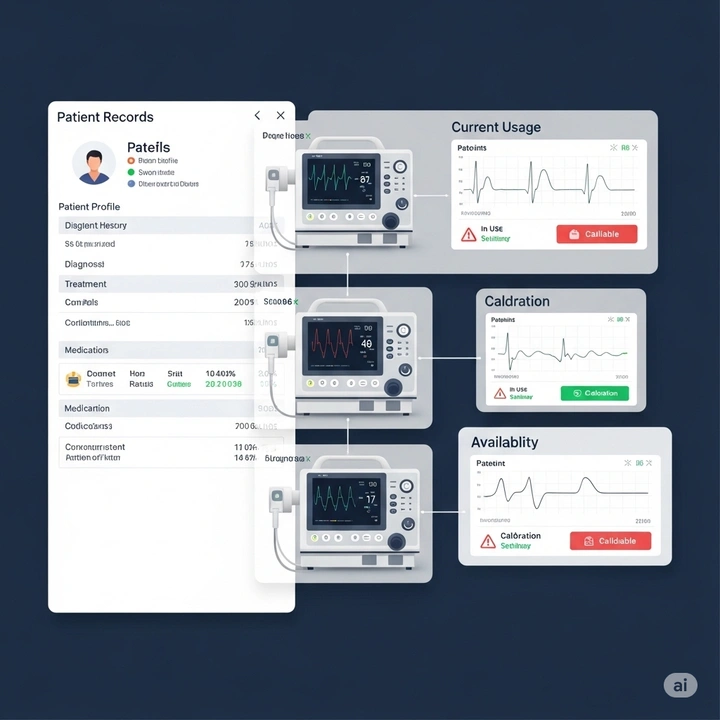
Modern healthcare requires systems that talk to each other. The Equipment Cloud is built to integrate effortlessly into patient-focused platforms, ensuring clinical data and equipment data remain in sync:
- Care Workflow Alignment: Equipment status can influence scheduling, diagnostics, and patient handoffs.
- Compliance Tracing: Ensure devices used in patient care meet necessary calibration and certification standards.
- Unified Patient + Equipment View: Enable clinicians to see patient interactions alongside device usage for deeper insights.
By embedding equipment intelligence within broader care workflows, the platform creates a connected clinical environment where technology supports—not obstructs—patient outcomes.
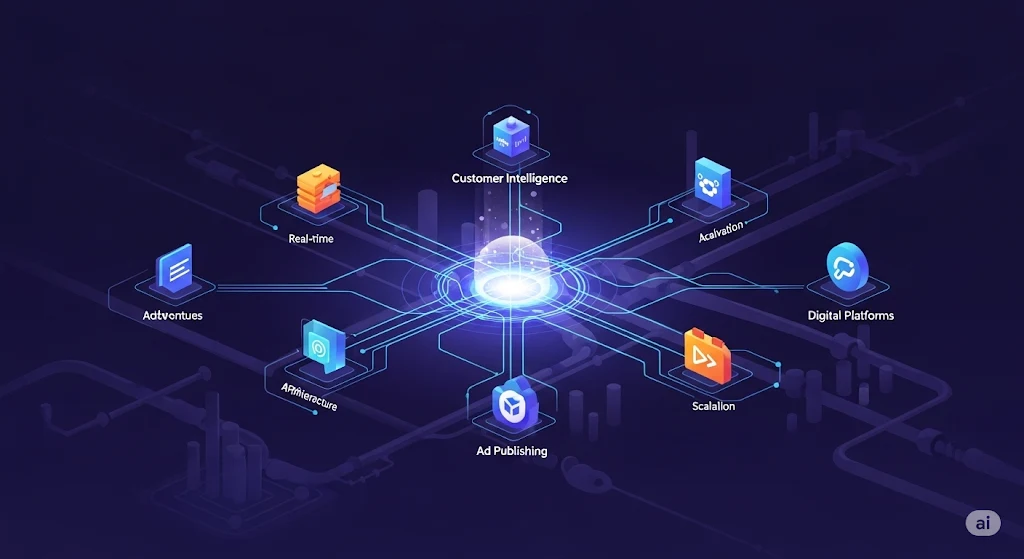
Unlocking Real-Time Ad Publishing with Intelligent Data Activation
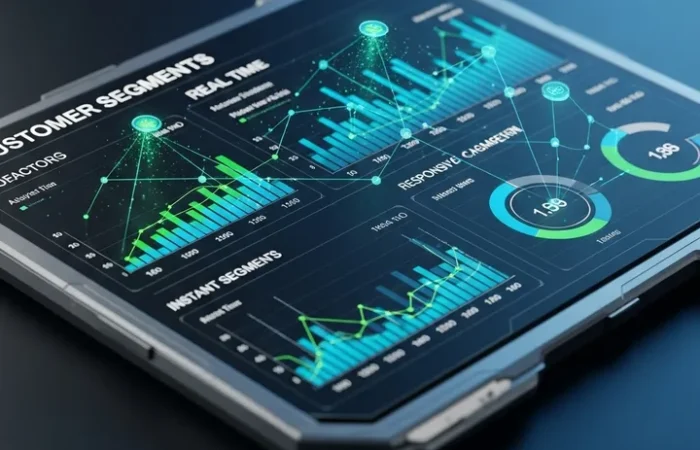
🎯 Real-Time Segment Activation
No more waiting for daily data syncs. This system enables the activation of refined customer segments the moment they’re ready—triggered instantly from the centralized data source. This translates into ultra-responsive campaign execution, increased relevancy, and better ROI.
Whether launching a flash sale or retargeting an abandoned cart, the time between insight and action is now measured in seconds, not hours.
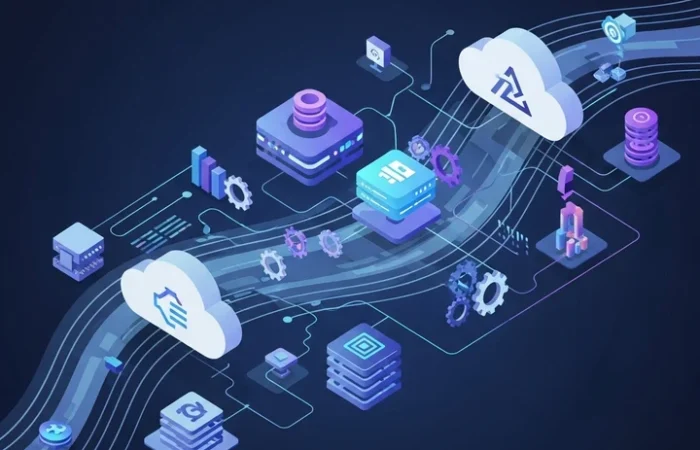
⚙️ Serverless Workflow Automation
The entire publishing lifecycle is orchestrated without manual intervention. Serverless components automate segment readiness checks, audience pushes, and even campaign updates.
This automation eliminates operational friction, reduces time-to-market, and allows your marketing teams to focus on strategy rather than data logistics.

🔌 Direct Connection to Ad Platforms
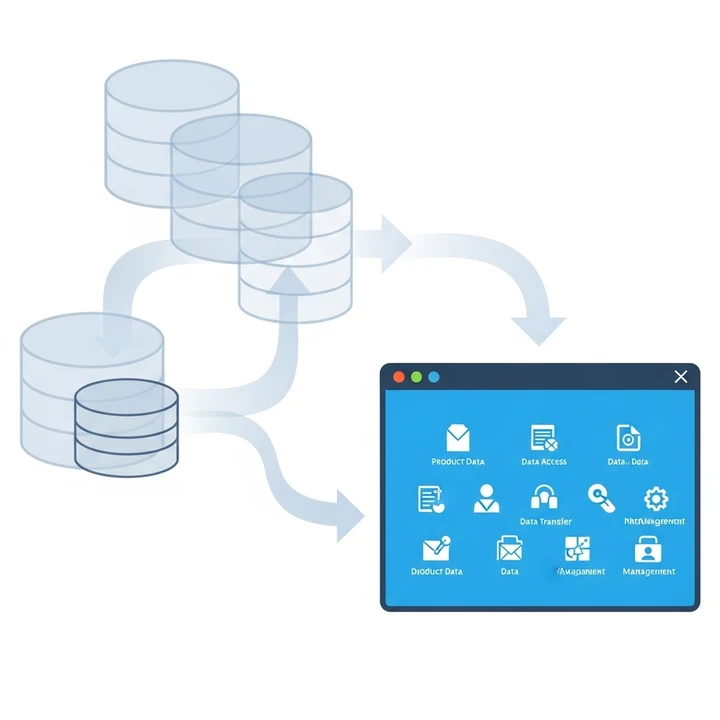
By integrating directly with advertising ecosystems through secure APIs, campaigns are deployed straight from the source with no middleman. Audience lists, campaign settings, and even performance feedback loop into the system without additional processing or transformation layers.
This tight integration results in faster activation, minimal overhead, and a single source of truth for your marketing operations.
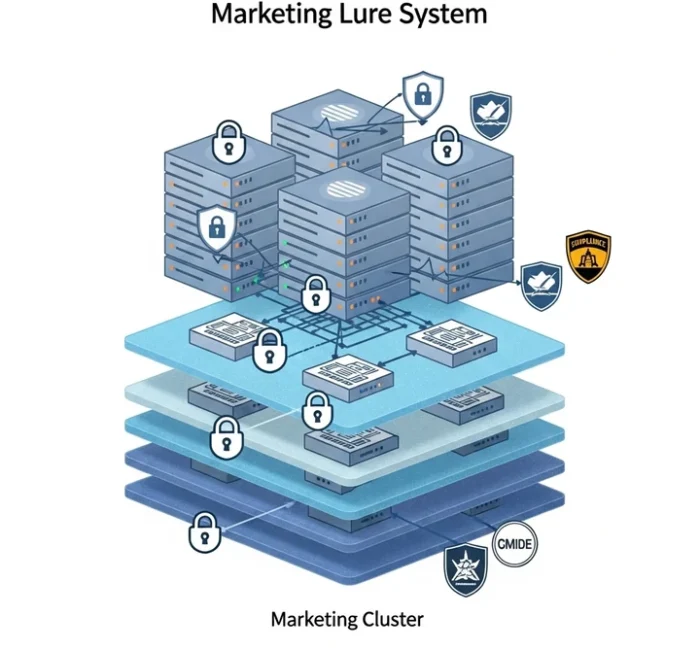
📏 Scalable, Compliant Architecture
As customer expectations evolve, scalability and compliance cannot be compromised. This framework is built to support high-volume marketing needs across global regions—while adhering to data residency, privacy, and consent management policies.
From encryption-in-motion to access controls, every interaction with the system respects enterprise-grade data governance standards.
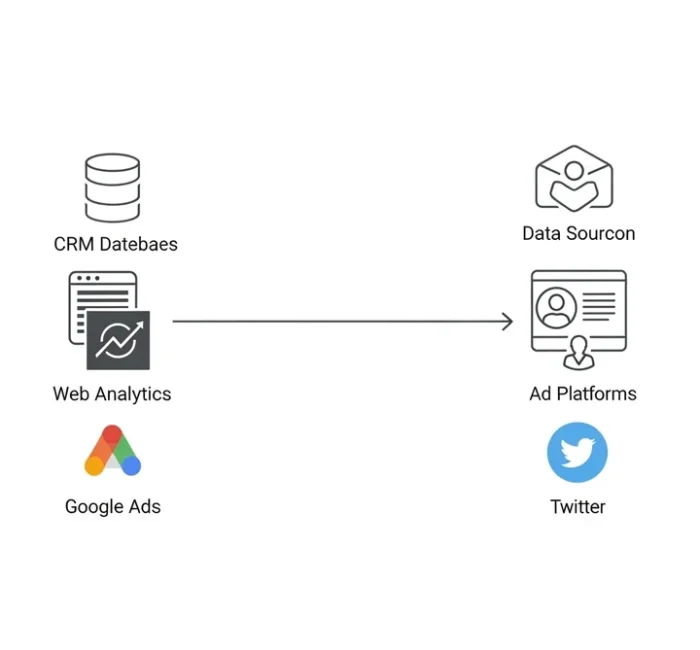
🧼 ETL-Free Data Publishing
Say goodbye to Extract-Transform-Load (ETL) fatigue. This pipeline bypasses the traditional model by enabling direct activation from source to destination, eliminating the complexity and delays caused by intermediate data processes.
The result? Campaign data that’s leaner, faster, and far more efficient—without unnecessary handoffs or replication.

🔐 Enhanced Data Governance
Control remains centralized. Data is never exported or duplicated beyond what’s necessary, which simplifies compliance with internal policies and external regulations. Audit trails, user controls, and activity logs provide full transparency, ensuring every data interaction is trackable and trustworthy.
Your marketing strategy is now powered by data that’s not only smart—but secure.

⏩ Accelerated Campaign Turnaround
In traditional workflows, it could take hours or even days for a campaign to be activated after a segment is defined. Not anymore. This pipeline shrinks that timeline dramatically, enabling near-instant campaign readiness.
This agility is crucial for capitalizing on market trends, reacting to customer behavior, or personalizing messages in real time.

🔄 Seamless Customer Data Synchronization
Customer profiles, behaviors, and lifecycle stages are instantly synchronized between your core intelligence system and campaign platforms. This ensures ad targeting is always based on the most accurate and relevant data—without manual refreshes or version mismatches.
Marketers can now launch campaigns with confidence, knowing their audiences are up to date and well-defined.
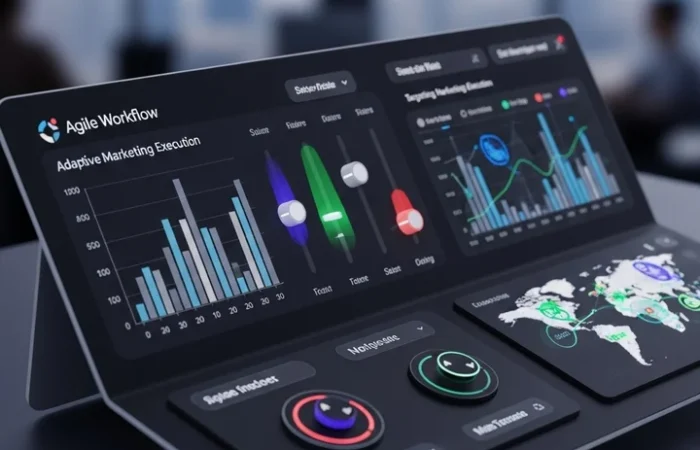
⚡ Operational Agility in Ad Targeting
The combined benefits of real-time access, automation, and direct connectivity empower marketers to experiment faster, iterate with precision, and make smarter budget decisions. Campaigns can be paused, adjusted, or duplicated in minutes—all while maintaining full alignment with business objectives.
This level of agility is not just a technical achievement—it’s a strategic advantage.
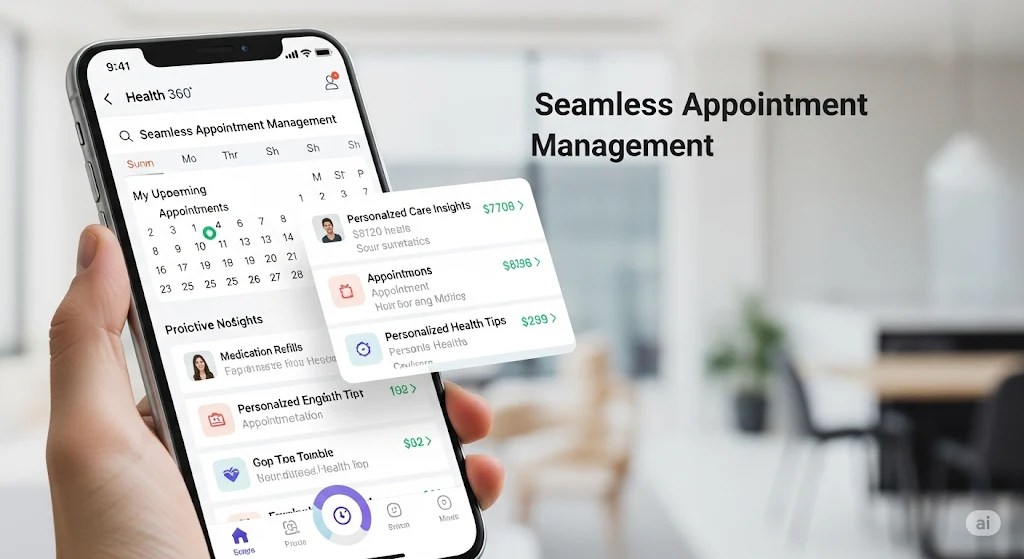
Health 360: Redefining Patient Engagement and Care Management
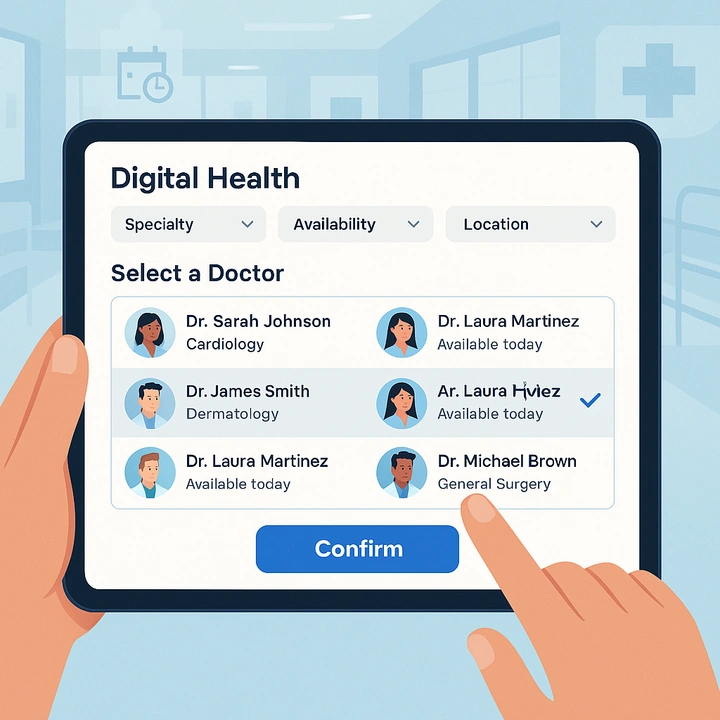
🔹 Smart Appointment Booking
Streamlined Scheduling with Real-Time Access
Health 360 introduces an intuitive and dynamic appointment booking mechanism that allows patients to select physicians, care teams, or facilities based on multiple intelligent filters. The system leverages real-time availability and historical patient preferences to ensure bookings are fast, relevant, and frictionless. Patients can view open slots, select preferred timeframes, and instantly confirm appointments—all from a single unified interface. Whether routine checkups or specialist consultations, every scheduling interaction is optimized for speed and accuracy.
Business Impact: Reduces call center load, improves patient satisfaction, and increases schedule adherence rates through digital-first interactions.
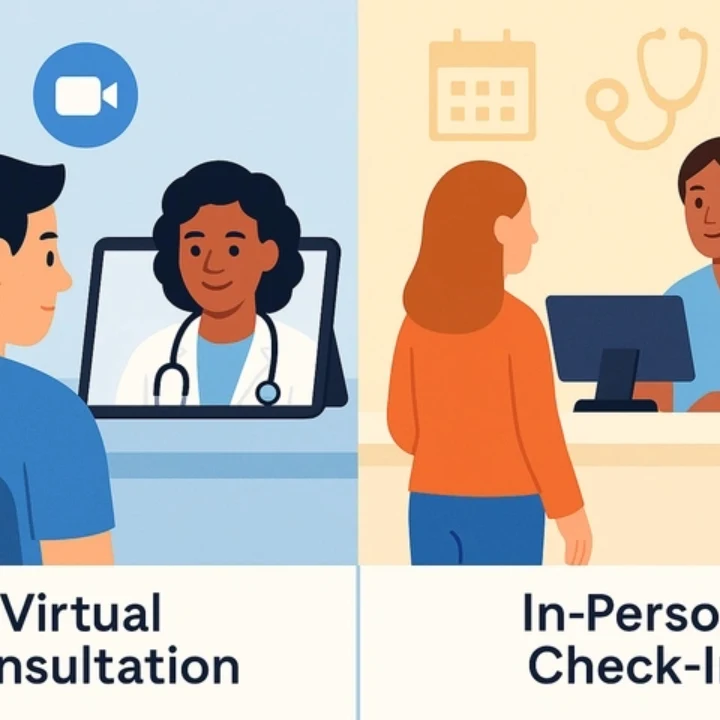
🔹 Multiple Appointment Types (Virtual and In-Hospital)
Hybrid Care Delivery at Scale
Healthcare is no longer confined to four walls. With Health 360, organizations offer both in-person and virtual appointment options, supporting diverse patient preferences and healthcare delivery models. This hybrid functionality ensures that access to care remains uninterrupted—regardless of geography or mobility constraints. Patients receive clear guidance on whether a service is available virtually or onsite. Integrated video consultation capabilities ensure that virtual visits are as effective and secure as physical ones.
Business Impact: Enhances accessibility, supports remote care models, and maximizes clinical reach across patient populations.
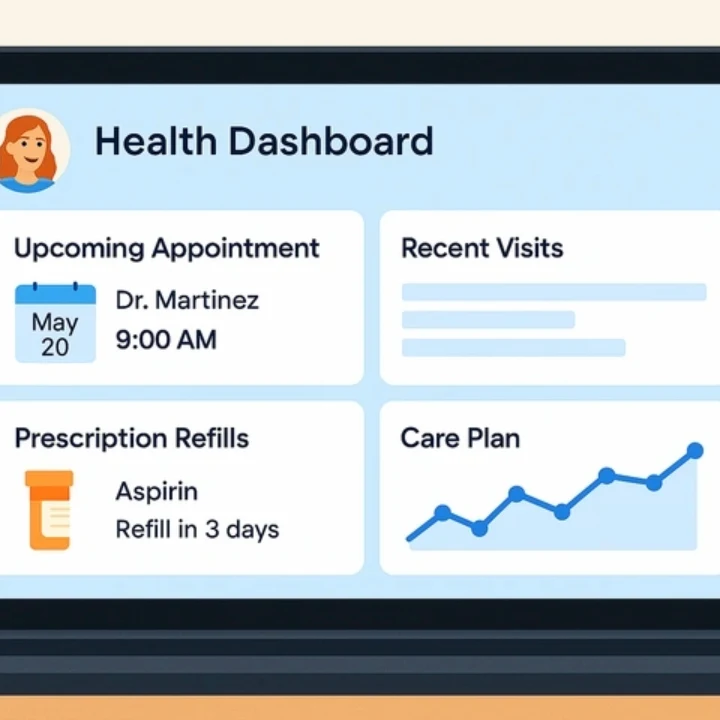
🔹 Personalized Health Dashboard
One Unified View of Health
The Health Dashboard serves as a real-time control center for patients, offering a consolidated view of all critical health-related touchpoints. From upcoming appointments and prescription histories to recent visits and customized care plans, the dashboard delivers actionable insights tailored to each patient’s health journey. Behind the scenes, a robust data architecture aggregates and surfaces relevant clinical and operational data, enabling proactive decision-making and self-service health management.
Business Impact: Empowers patients with transparency, reduces administrative dependencies, and promotes adherence to care protocols.
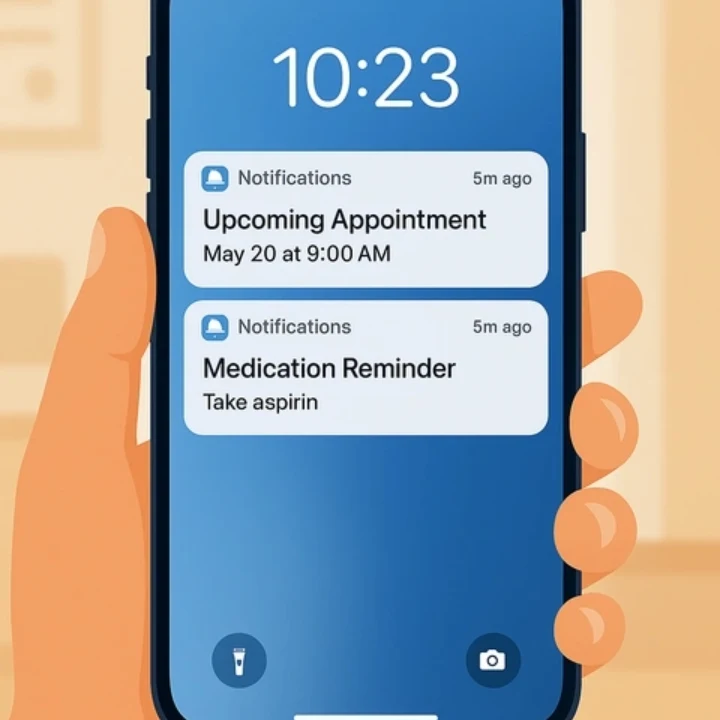
🔹 Automated Notifications & Reminders
Proactive Engagement that Drives Adherence
Health 360 features intelligent engagement tools that send automated reminders for appointments, medication schedules, and follow-up visits. These nudges are context-aware—customized based on individual timelines, treatment plans, and clinician instructions. Notifications are delivered across preferred channels, ensuring timely outreach and reducing no-show rates. The automation framework behind these alerts enables configurable communication flows tailored to specific patient segments and scenarios.
Business Impact: Improves patient compliance, minimizes missed appointments, and boosts operational efficiency through automation.

🔹 User-Friendly Interface
Frictionless Design for Diverse User Demographics
Recognizing the diversity in digital literacy among patients, Health 360 emphasizes a clean, accessible, and intuitive user experience. Every screen is optimized for clarity, speed, and responsiveness—across devices and platforms. From initial login to appointment confirmation, the journey is designed to minimize cognitive load and enhance usability for users of all ages and backgrounds.
Business Impact: Increases portal adoption, enhances patient satisfaction, and ensures equitable access to digital health services.
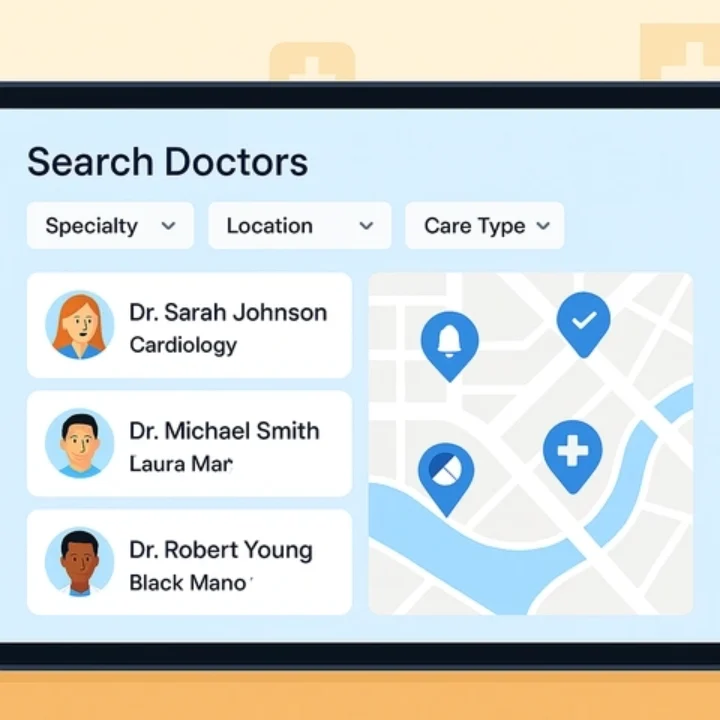
🔹 Comprehensive Doctor Search
Precision Matching for Patient Needs
Finding the right care provider is central to health outcomes. Health 360 empowers patients to search for doctors based on specialty, subspecialty, location, and even care team affiliations. A robust search algorithm filters results based on patient inputs and preconfigured provider criteria. Integrated maps and facility metadata further assist in identifying optimal matches, ensuring patients are paired with the most suitable professionals for their unique care needs.
Business Impact: Enhances provider discovery, accelerates the decision-making process, and improves clinical alignment.
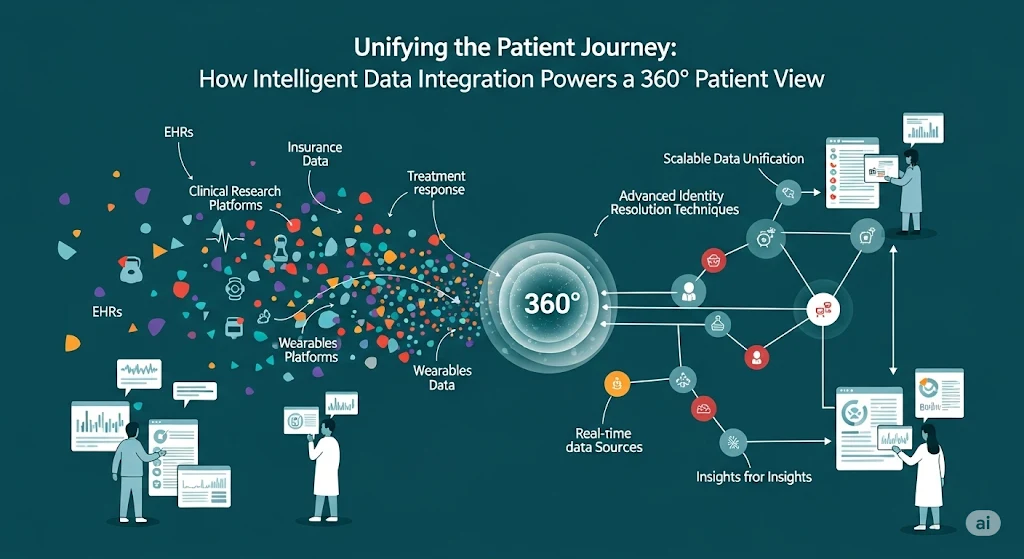
Unifying the Patient Journey: How Intelligent Data Integration Powers a 360° Patient View
🔄 Multi-Source Data Integration
🧩 Data Ingestion via Automated Pipelines
🧬 Identity Resolution
🧠 360° Unified Patient View
⚡ Real-Time Synchronization Across Systems
🔄 Multi-Source Data Integration
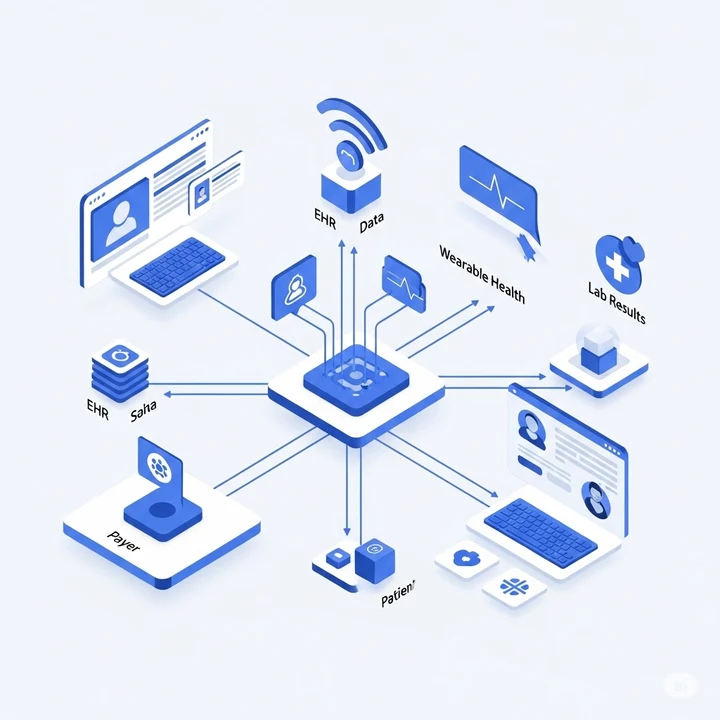
The first step in creating a unified patient profile involves breaking down silos across systems. To achieve this, a robust middleware orchestrates the ingestion of patient records from multiple external and internal sources. These include electronic health records (EHRs), laboratory systems, wearable health monitors, and payer databases.
This integration layer standardizes disparate data formats and enables seamless communication between data producers and the central healthcare platform. Secure APIs ensure compliance with healthcare regulations while supporting scalable data pipelines for continuous ingestion.
🔹Outcome: Accelerated integration across clinical, administrative, and digital health systems with minimal development overhead.
🧩 Data Ingestion via Automated Pipelines
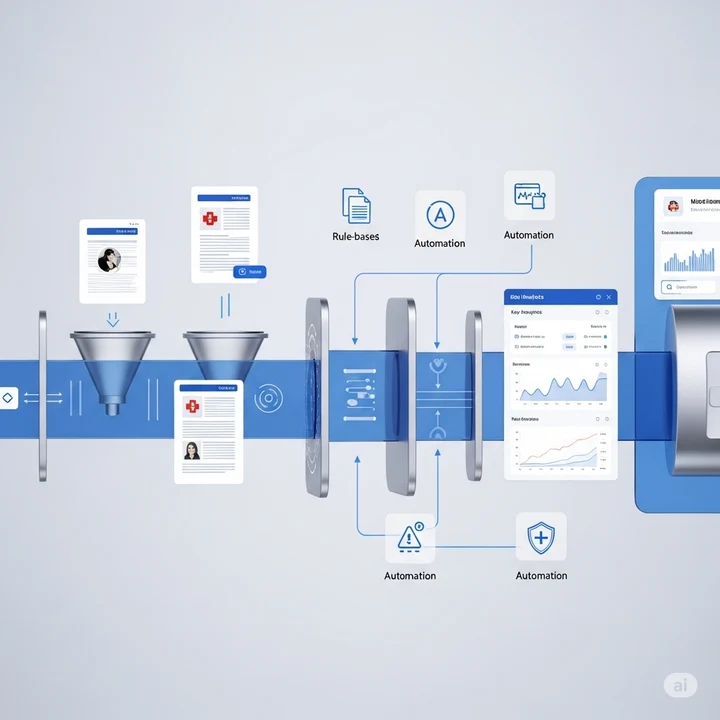
Once the data reaches the integration layer, it undergoes structured processing. Intelligent ingestion pipelines validate, cleanse, and categorize incoming records before routing them to the unified patient data model.
Automated logic handles source prioritization, record timestamping, and domain-specific enrichment (e.g., medication classification, diagnostic groupings). The ingestion framework is designed for extensibility, ensuring that new data sources can be onboarded with minimal friction.
🔹 Outcome: Continuous flow of high-quality, real-time data into the platform, ready for downstream identity resolution and analytics.
🧬 Identity Resolution

At the heart of patient unification lies a robust identity resolution engine. This system uses deterministic and probabilistic matching to reconcile fragmented or duplicate patient records, even when data is incomplete or inconsistent.
Advanced matching rules—enhanced by AI—evaluate attributes such as names, birth dates, contact information, and contextual clinical markers. Confidence scores are assigned to every match, and manual review workflows are triggered for edge cases to ensure maximum accuracy.
🔹 Outcome: Consolidated patient identities across data sources, reducing duplication and enabling a single, trusted profile for each individual.
🧠 360° Unified Patient View
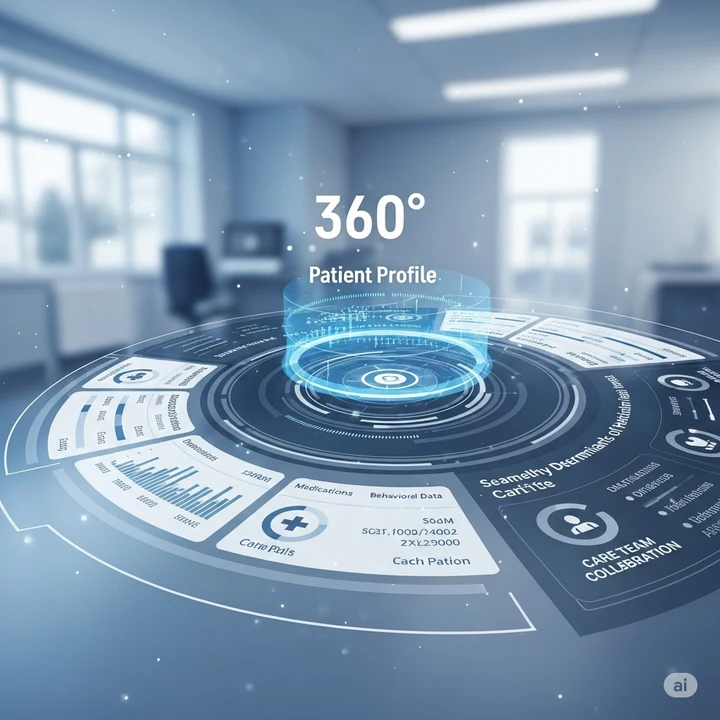
Once records are merged, the platform generates a dynamic 360° patient profile that serves as the single source of truth across the enterprise. This profile aggregates demographics, clinical history, treatment plans, behavioral health indicators, and social determinants of health.
Care coordinators, clinicians, and administrative staff can access this unified view in real-time, regardless of their role or system interface. Embedded insights assist with personalized treatment planning, gap-in-care identification, and care team collaboration.
🔹 Outcome: Empowered decision-making with real-time access to accurate, complete, and contextually enriched patient profiles.
⚡ Real-Time Synchronization Across Systems

Unification doesn’t end at data consolidation. The platform ensures that patient profiles remain up-to-date as new records are ingested or existing data is modified. Event-driven architecture enables real-time synchronization across connected systems, whether it’s a care management platform, telehealth interface, or mobile patient portal.
Data changes are propagated instantly, and changes are logged for auditability and compliance. This ensures consistency in patient interactions across departments and channels—critical for both operational efficiency and patient satisfaction.
🔹 Outcome: Unified, real-time patient data delivered at the point of care—no more outdated records, manual reconciliations, or version conflicts.